

Why Your AI Inventory Must Now Include Agentic AI Systems
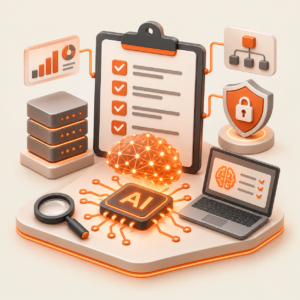
Modern software systems are moving beyond simple tools that respond to user requests. Today, AI-powered applications can connect with databases, support workflows, communicate with users, and perform tasks across different business systems based on defined instructions.
This shift from basic automation to more autonomous AI capabilities is changing how organisations manage technology. Traditional tracking methods may not provide enough visibility into systems that can access data, interact with platforms, and perform multiple actions.
T3 helps organisations map and understand these evolving AI workflows so teams can maintain better oversight of their technology environment. Updating your AI inventory management practices helps ensure AI systems remain visible, accountable, and aligned with organisational governance requirements.
Key Takeaways
- Agentic AI systems require organisations to expand traditional AI inventory practices.
- AI inventories should include information about AI capabilities, ownership, data access, and system actions.
- Monitoring AI agents enhances transparency and aids in effective governance.
- A full inventory facilitates AI risk management and future compliance requirements.
- Organisations can create stronger AI governance by documenting and reviewing AI systems regularly.
What are Agentic AI Systems?
Traditional AI systems usually respond to user requests by generating content, analysing data, or providing recommendations. Agentic AI systems are different because they can perform multi-step processes, make decisions based on instructions, and interact with other tools or platforms.
Agentic AI systems can be used to:
- Complete business workflows
- Access connected applications
- Manage repetitive tasks
- Make judgements within boundaries
- Start activities on a system scale.
These capabilities bring new opportunities to the organisation and also new areas that need to be visible and monitored.
Why Traditional AI Inventories Are No Longer Enough
There are already several organisations that monitor and track AI models, applications and software platforms. But traditional inventory approaches might not be able to account for AI systems that can take actions on their own.
Agent-based systems introduce additional details that businesses need to monitor, including:
- The type of activities that the AI agent is able to perform.
- The systems to which it can connect
- What data it uses
- Who is in charge of its management
- The scope of its decision making authority.
Without this information, organisations may struggle to understand how AI systems operate within their environment.
A broader AI asset inventory helps businesses create a clearer view of their AI landscape and supports stronger governance processes.
Why Your AI Inventory Must Include Agentic AI Systems
As AI becomes more prevalent, having AI agents in inventory processes ensures a greater sense of control for organisations.
Key reasons include:
1. Improved visibility: AI agents can be traced by organisations and their actions can be comprehended.
2. Ownership: Clearly assigning responsibility helps ensure every AI system is properly managed and accountable.
3. Enhanced risk assessment: Companies can take into account possible security, privacy and operational risks.
4. Better policies and review: An AI inventory provides the information needed to review AI systems, strengthen governance, and support compliance.
An updated inventory enhances an AI governance framework by providing teams with information to effectively manage AI systems.
What Information Should Be Added to an AI Agent Inventory?
It is not enough to simply know what AI tools are for; it’s important to be able to track them as well. Key information about each system should be recorded in the organisation.
| Inventory Detail | Purpose |
| AI Agent Name | Identifies the system |
| Business Purpose | Explains why it is being used |
| Owner Information | Defines responsibility |
| Connected Systems | Shows what platforms it can access |
| Data Usage | Identifies information being processed |
| Actions Performed | Explains what the agent can do |
| Risk Level | Supports review and evaluation |
| Compliance Status | Tracks regulatory requirements |
This information empowers organisations to comprehend the operations of AI and assists in more informed decision-making.
How AI Inventory Management Helps Control Agentic AI
Managing AI agents requires ongoing visibility for their usage, capabilities, and risks. A well-designed inventory will allow for the organisation to monitor changes and keep updated records.
AI inventory management can assist businesses in the following ways:
- Identify new AI agents in various departments.
- Check the permissions of the system and the access level.
- Assign clear ownership
- Stay informed about advancements in AI technologies.
- Provide support to internal governance reviews
The process can also help with AI risk management, to see whether any more systems need to be analyzed.
AI risk assessment services can help organisations assess potential risks for data usage, security and system behaviour.
How AI Governance Supports Agentic AI Management
Agentic AI requires governance processes that can keep pace with its autonomous capabilities. There should be clear guidelines for approval, monitoring and accountability among organisations.
The following elements are considered part of a good governance process:
- AI usage policies
- Defined ownership responsibilities
- Regular system reviews
- Documentation requirements
- Security assessments
These practices assist in enterprise AI governance, enabling organisations to manage AI systems among various teams and business operations.
Services like AI model testing and assurance can assist organisations assess the performance, reliability, and vulnerabilities of AI systems before their deployment.
Preparing for the Future of AI Adoption
Organisations need to rethink technology tracking and management in the face of the evolving nature of AI agents. Unlike traditional applications, AI agents can take autonomous actions, making greater visibility and oversight essential.
Companies that want to increase their use of AI should prioritize:
- Keeping accurate AI records
- Taking a look at new AI features
- Visibility into the systems an AI agent can access.
- Develop policies for support of AI use in context
- Plan for changing AI compliance rules and regulations
A clear governance process provides the foundation for Responsible AI adoption by ensuring effective oversight, accountability, and risk management.
An AI compliance framework can also aid businesses link the use of AI to internal policies and outside regulatory needs.
Final Thoughts
AI agents are driving the evolution of how organisations harness technology and the importance of AI visibility is only growing.
Effective AI inventory management enables organisations to track emerging AI capabilities, maintain oversight, and prepare for the challenges associated with increasingly autonomous AI systems. T3 supports organisations in designing, implementing, and maintaining AI inventories tailored to their governance and compliance requirements. This improves visibility across the AI estate, strengthens governance, supports risk assessment, and provides a stronger foundation for Responsible AI adoption.
Looking to strengthen your organisation’s AI governance approach? T3 can help you establish and maintain a comprehensive AI inventory that improves visibility, supports compliance, and enables effective oversight of AI systems.
FAQs
1. What are agentic AI systems?
Agentic AI systems are AI systems that can perform tasks, communicate with other systems, and complete workflows with little to no human supervision.
2. Why should AI inventories include agentic AI systems?
An AI agent may be able to access systems, process information, and even take actions; this means it’s crucial for organisations to know what kinds of capabilities they have and who owns them.
3. What is the contribution of AI inventory management to good governance?
AI inventory management provides organisations with a greater understanding of their AI systems, who is responsible for them, a review of risks and improved oversight.
4. What information should organisations track about AI agents?
The organisations should monitor information about system purpose, system owner, data access, platforms connected, data operations performed, risk levels etc.
5. What are some strategies for businesses to mitigate risks associated with agentic AI?
Risks can be managed by having well-defined governance frameworks, ongoing evaluation, AI risk assessment, and documentation of the AI systems.
