
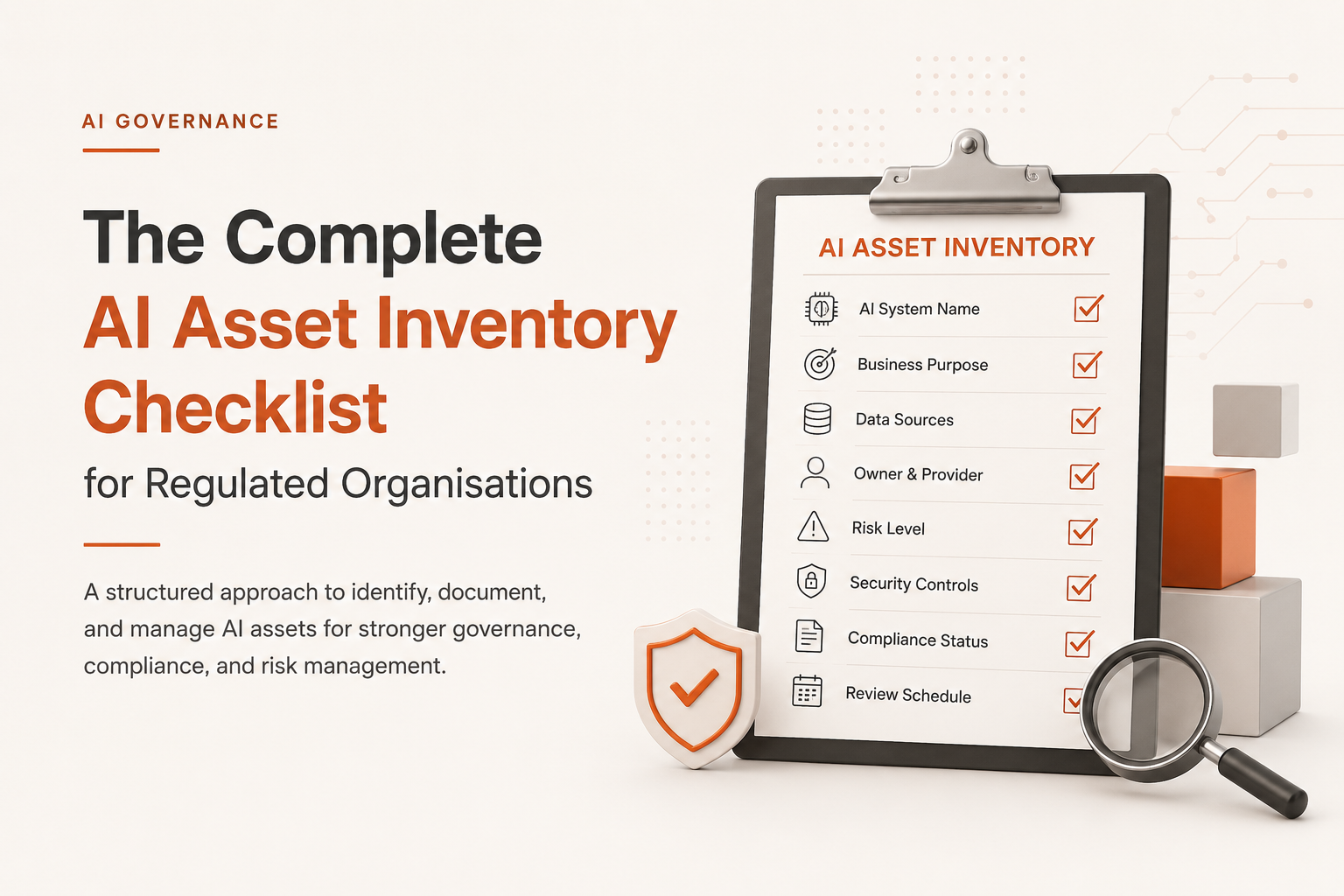
The Complete AI Asset Inventory Checklist for Regulated Organisations

T3 helps organisations strengthen their AI governance practices through services focused on AI assurance, risk management, and responsible AI adoption.
An AI Asset Inventory Checklist helps regulated organizations identify, document, and monitor their AI assets in a structured way. It gives teams better visibility into their AI environment and supports stronger governance decisions.
Key Takeaways
- An AI Asset Inventory helps organisations track AI systems, applications, models, and related technologies.
- Regulated industries need proper documentation to support AI compliance and risk management.
- An inventory should contain ownership, data use, risk and compliance information.
- Frequent audits ensure organisations stay in control of their AI environment.
- A strong inventory supports responsible AI practices and creates a foundation for effective AI governance.
What is an AI Asset Inventory?
An AI asset inventory is a central record of all AI-related systems used within an organisation. These assets can include machine learning models, generative AI applications, automated decision systems, and third-party AI platforms.
An AI Asset Inventory is also different from a typical software inventory because it should include extra information on how the AI systems work. Organisations should be aware of what data is being used, who is responsible for the system and what risks may relate to its use.
An AI Asset Inventory can include the following:
- AI system name and purpose
- The business department that will use the system.
- Data sources involved
- System owner
- Technology provider
- Risk classification
- Compliance requirements
Having this information helps organisations create stronger processes around AI governance and support better decision-making.
Why Do Regulated Organisations Need an AI Asset Inventory?
Regulated organisations using AI face increasing demands for transparency, accountability, and robust risk management. If not tracked properly, businesses could be having trouble understanding where AI systems are, and how they’re being utilized.
An AI Asset Inventory for Compliance is used to keep records that facilitate internal reviews, regulatory preparedness and governance processes.
A well managed inventory can help businesses:
- Identify all AI systems across departments
- Know where sensitive information is being used
- Clarify responsibilities for AI applications.
- Review risks prior to deployment
- Complete documents for regulatory purposes
A strong AI governance framework depends on accurate information about the AI systems operating within an organisation. With this transparency, teams can develop more effective controls and enhance their AI governance practices.
AI Asset Inventory Checklist: What Should Organisations Track?
Creating a complete inventory requires collecting important details about every AI asset. The following checklist can help organisations build a structured record.
| AI Asset Details | Purpose |
| AI System Name | Identifies the technology being used |
| Business Purpose | Explains why the AI system exists |
| Owner Information | Defines responsibility |
| Data Sources | Shows what information the system uses |
| AI Provider | Tracks internal or external solutions |
| Risk Level | Helps identify systems requiring review |
| Security Controls | Documents protection measures |
| Compliance Status | Tracks regulatory alignment |
| Review Schedule | Helps maintain updated records |
This information supports better AI risk management by helping teams understand which AI assets require additional evaluation.
How to Build an AI Asset Inventory Step by Step
It takes multiple teams within an organisation to build an inventory. Technical, business, security and compliance stakeholders should be involved in the process.
1. Identify All AI Assets
The first step is to identify all the existing AI systems in the company.
This includes:
- Internally developed AI models
- Third-party AI applications
- AI features included in existing software
- Generative AI tools used by employees
Different departments provide a way to find out AI systems that may not be formally documented.
2. Record Ownership and Usage Details
There should be clear ownership information for each AI asset. Teams should create a record of who is responsible for the system, why it is in use, and which business functions rely on the system.
Clear ownership facilitates improved monitoring and enables organisations to respond rapidly to the need for reviews.
3. Evaluate Risks and Compliance Needs
All AI systems should be assessed in terms of their scope of use, data input and influence.
AI risk assessment services can be employed by organizations to assess various aspects like:
- Data privacy concerns
- Security risks
- System reliability
- Regulatory obligations
The reviews contribute to enhanced governance and a more effective way for businesses to establish appropriate measures in their respective AI landscape.
How AI Governance Supports Regulated Organisations
AI governance is the framework that helps organisations govern AI systems responsibly. An inventory is a starting point that reveals what AI assets are available and how they are leveraged.
Good governance can encompass:
- AI Asset Reviews are conducted regularly.
- Risk classification processes
- Documentation standards
- Internal approval processes
- Compliance monitoring
Organisations seeking to achieve AI Governance for Regulated Organisations should establish clear processes linking AI usage to business policies and regulatory expectations.
AI system performance, security, and reliability can also be assessed using services like AI model testing and assurance, prior to deployment.
Common Challenges When Managing AI Assets
However, it can be challenging for organisations with large teams and technologies to maintain an AI inventory.
Common challenges include:
- Discovering undocumented AI tools
- Monitoring AI solutions from other parties.
- Ensuring records are updated following system changes
- Ensuring information is shared across departments
Creating regular review processes and connecting inventory management with an AI compliance framework can help organisations maintain better visibility.
Final Thoughts
AI adoption is expanding across regulated industries, hence making visibility and governance is essential for organisations using AI technologies. An AI Asset Inventory helps businesses understand their AI environment, identify risks, and create stronger compliance processes.
An organized inventory enables improved governance, transparency, and readiness for future AI needs. T3 provides AI governance consulting services to businesses, assisting them in establishing robust governance frameworks for AI systems.
Creating a complete inventory is an important step toward safer AI adoption and effective enterprise AI compliance.
1. What is an AI asset inventory?
An AI asset inventory is a record of all AI systems, applications, models, and related technologies used within an organisation. It contains information on how the data is owned, how it is used, its purpose and levels of risk.
2. Why do regulated organisations need an AI asset inventory?
For regulated organizations, an AI inventory is essential for understanding where AI is being used, support compliance, manage risk, and improve accountability.
3. Which of the following should be part of an asset inventory checklist for an AI?
The key elements in an AI asset inventory checklist are system information, owner, data sources, risk classification, security controls, and compliance status.
4. How often should an AI asset inventory be updated?
Businesses should regularly audit their inventories to identify new AI systems, usage changes, and evolving compliance standards.
5. How does AI risk assessment support AI governance?
AI risk assessment enables organizations to identify potential risks for security, data usage and system performance. It helps in making better governance decisions and manage AI responsibly.
