
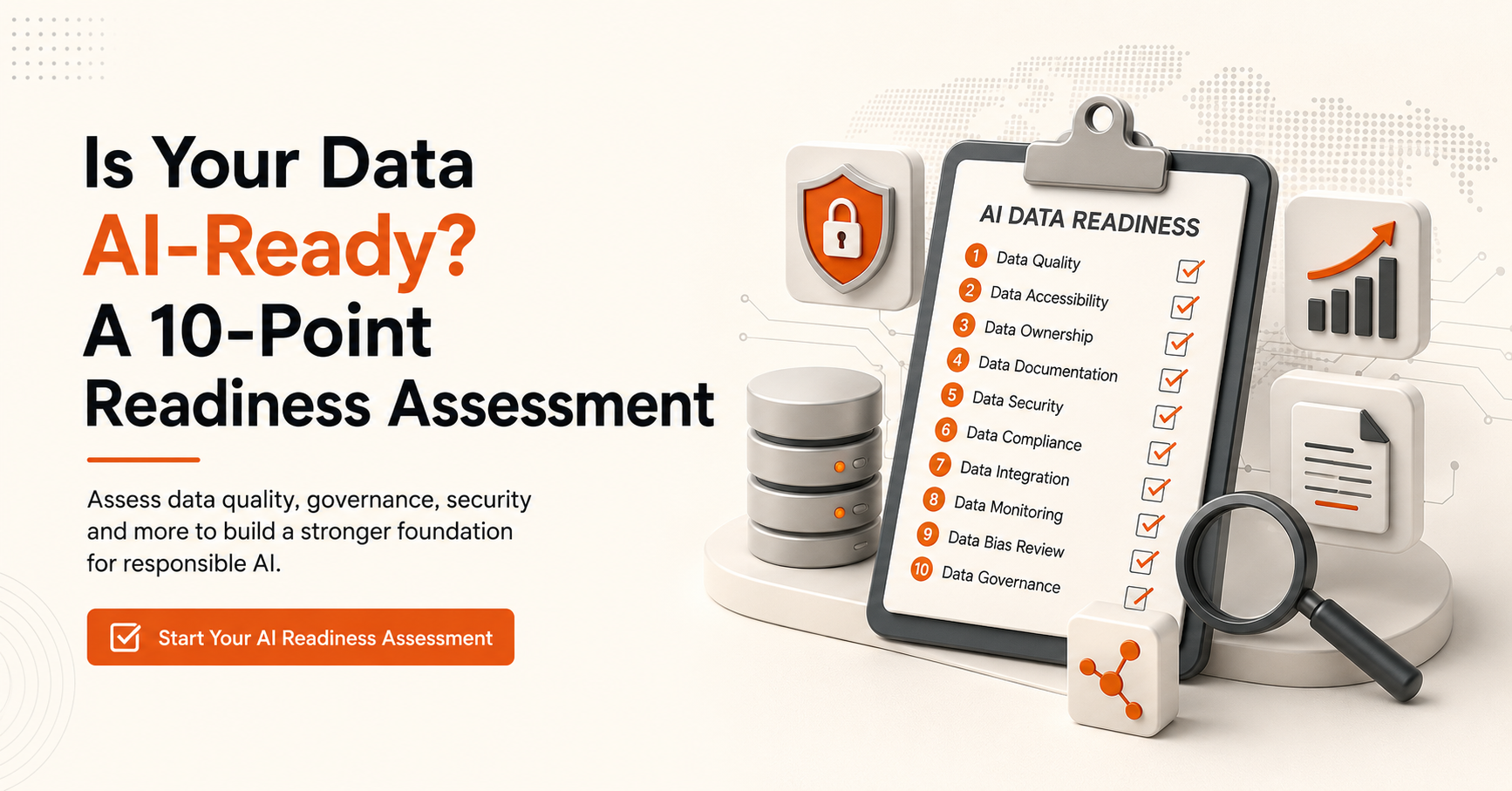
Is Your Data AI-Ready? A 10-Point Readiness Assessment

T3 helps organisations evaluate their data environment, improve AI governance practices, and create stronger processes for managing AI systems securely. A structured readiness review allows teams to identify data gaps, understand potential risks, and establish better controls before investing further in AI initiatives.
Evaluating data quality, accessibility, security, and governance gives leadership teams clearer visibility into whether their current data environment is prepared to support successful AI adoption.
Key Takeaways
- AI systems depend on accurate, secure, and well-managed data.
- A readiness assessment enables organisations to recognise the gaps in data before implementing AI.
- Data quality, governance, security, and ownership are important parts of AI preparation.
- Strong data management supports better AI performance and regulatory alignment.
- Regular reviews help businesses maintain better control over AI-related data processes.
What is AI-Ready Data?
AI-ready data refers to information that is suitable for use with AI systems. This does not only mean having large amounts of data. The information has to be accurate, readily available, secure, and well-managed.
AI-ready data should have:
- Clear ownership
- Reliable sources
- Proper documentation
- Strong security controls
- Appropriate access permissions
Without these foundations, AI systems may produce unreliable outputs or create risks for business operations.
The Importance of Data Readiness for AI Adoption
Many organisations focus on selecting AI tools but overlook whether their existing data can support those systems. The performance of AI models relies on the data they are trained with and may be impacted by data quality issues.
A proper data readiness assessment for AI helps businesses review their current data environment before deploying AI solutions.
This assessment can help organisations:
- Recognize gaps in or outdated information
- Discuss data security procedures
- Understand data ownership
- Find compliance gaps
- Improve governance processes
Improved data foundations also lead to improved AI risk management as they help companies detect potential risks in advance of business operations.
10-Point AI Data Readiness Assessment Checklist
A structured review enables organisations to determine if their data is ready for use with AI.
- Data Quality Review
Organizations should review if the data is current, accurate and up to date. AI results can be influenced by inaccurate or incomplete information.
- Data Accessibility
Teams must know whether authorized users and systems have access to the information required for access.
- Data Ownership
Defining clear ownership helps establish who is responsible for decisions relating to data quality, access, and use.
- Data Documentation
Information about data sources, definitions, and usage should be properly recorded.
- Data Security
Sensitive information should be protected by appropriate security controls to prevent unauthorised access or misuse.
- Data Compliance
Data usage should align with internal policies and regulatory requirements related to privacy and security.
- Data Integration
Organisations should consider how effective information from various systems could be shared.
- Data Monitoring
Periodic reviews ensure the detection of changes, errors, and quality problems over time.
- Data Bias Review
Businesses should evaluate datasets to identify potential bias that may affect AI outcomes.
- Data Governance
Clear policies, responsibilities, and review processes support stronger AI governance.
What Should an AI Data Quality Checklist Include?
A complete AI data quality checklist helps organisations review the condition of their information before AI deployment.
| Data Area | Questions to Review |
| Accuracy | Is the information correct and reliable? |
| Completeness | Are important details missing? |
| Security | Is access properly controlled? |
| Documentation | Are data sources recorded clearly? |
| Compliance | Does data usage meet requirements? |
Maintaining strong data quality supports effective AI governance and helps organisations create more reliable AI systems.
Common Data Challenges that impact AI Readiness
Preparing data for AI adoption poses challenges for many businesses. These problems may impact performance, security, and governance.
Common challenges include:
- Information that is distributed across separate locations.
- Lack of clear ownership
- Outdated information
- Limited documentation
- Weak access controls
- Difficulty tracking data usage
Creating an AI asset inventory can help organisations improve visibility into the systems and information used across the AI environment.
How Governance enhances Data Readiness for AI?
Strong governance helps organisations manage data responsibly while preparing for AI implementation. An effective governance process defines ownership, review procedures, and accountability.
An enterprise AI governance strategy helps organisations establish consistent processes for managing AI systems and the data they use.
Services like AI risk assessment can also help organisations assess the risk and pinpoint areas that need further control within the process. Businesses can benefit from AI governance consulting to build more robust governance systems that align with their objectives.
Preparing Data for Responsible AI Adoption
Data preparation is an ongoing process that requires regular monitoring and improvement. Organisations need to audit their data practices as AI systems progress and business needs fluctuate.
Key steps include:
- Reviewing existing data sources
- Updating governance policies
- Improving documentation
- Monitoring data quality
- Aligning data governance processes with AI compliance requirements
Services such as AI model testing and assurance can also help organisations evaluate AI systems and improve confidence before wider implementation.
Prepare Your Data for AI Success
Strong data foundations are essential for building reliable and responsible AI systems. Partner with T3 to assess your AI readiness, strengthen governance practices, and build a secure data environment for future AI initiatives.
Start Your AI Readiness Assessment
Assess your data foundations, identify readiness gaps, and build a stronger foundation for secure and responsible AI adoption.
Final Thoughts
AI success depends on more than choosing the right technology. Good data foundations enable organisations to build trustworthy, safe and responsible AI systems.
Evaluating AI data readiness allows businesses to identify gaps, improve governance, and prepare their data environment for future AI adoption. T3 supports organizations in enhancing AI governance by improving how AI systems are identified, assessed, and overseen.
Ready to prepare your organisation for responsible AI adoption? Partner with T3 to improve data governance, strengthen AI readiness, and build a stronger foundation for successful AI implementation.
FAQs
- What is AI data readiness?
AI data readiness is the process of ensuring that data is accurate, accessible, secure, and properly managed before it is used by AI systems.
- Why is data quality important for AI?
Data quality enables AI systems to yield more accurate outcomes and minimise risks associated with inaccurate or incomplete data.
- What are the steps for organisations to evaluate the readiness of their data for AI?
A structured assessment allows organisations to evaluate data quality, ownership security, documentation, compliance, and governance.
- What should an AI data quality checklist include?
The accuracy, completeness, security, documentation, accessibility, and compliance should all be checked by an AI data quality checklist.
- How does governance support AI-ready data?
Governance establishes well-defined ownership, policies and review mechanisms to enable organisations to effectively govern their data for AI applications.
